HARRy: a social robot that helps primary school children cope with math anxiety
Project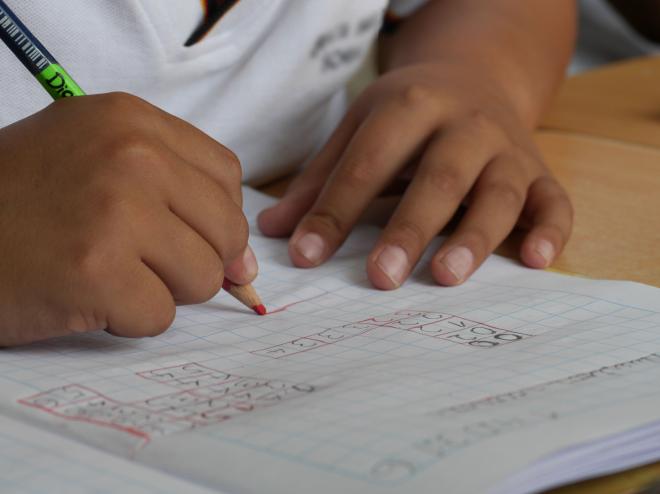
Children’s maths performance is under pressure, whilst the shortage of primary school teachers continues to grow. At the same time, emotions play a significant role in maths. Many children experience anxiety, stress or frustration during maths lessons, which can have a negative impact on their learning outcomes. The HARRy project is developing a social robot that supports children with both the cognitive and emotional aspects of maths.
Cause
Although teachers recognise the importance of emotions in maths, they often lack the time, knowledge, skills and appropriate resources to address this systematically. The available teaching time is mainly spent on teaching maths skills, whilst negative emotions towards maths can hinder the learning process.
As virtually all children experience negative feelings at some point whilst doing maths, and these feelings can become problematic over time, there was a need for a tool that supports teachers without creating an additional workload.
Goal
The project investigates how a social robot, supported by artificial intelligence and linked to a transparent teacher platform, can help primary school children manage their emotions around maths. A key focus is that the robot not only supports maths practice but also contributes to a positive maths experience. At the same time, teachers retain insight into their pupils’ development and are provided with practical guidance.
Approach
We are working with children, teachers, maths coordinators, maths experts, technicians and researchers to develop HARRy: the Helpful Affective Maths Robot.
The project consists of various development and testing phases. First, the requirements and specifications for the robot and the accompanying platform are identified. Based on this, initial prototypes are developed. These prototypes are then further refined in collaboration with children, teachers and maths coordinators during so-called rapid prototyping sessions.
The prototypes are then tested in schools and evaluated for aspects such as user-friendliness, validity and effectiveness. The insights gained from these evaluations form the basis for the final development of HARRy.
Expected outcomes
primary school children better manage their emotions around maths. Through short, child-friendly check-ins, HARRy can identify when a child is feeling anxious, frustrated or uncertain, and deploy appropriate emotion-regulation strategies.
In addition, a teacher platform is being developed that provides insight into learners' experiences and offers support in guiding maths processes. In this way, the project contributes to a learning environment that focuses not only on maths skills, but also on children’s emotional well-being whilst learning.
Contact person
Simone den Droog, Associate professor Child Technology Interaction Digital Life
Partners
- Ponto Centre of Expertise
- Municipality of Diemen
- Utrecht University of Applied Sciences
- Iretail.Solutions B.V.
- Radboud University
- Florente Foundation
- Vrije Universiteit Amsterdam (VU)
Funding
- RAAK-publiek